
Small Bedroom, Big Potential: Unlocking Your Layout
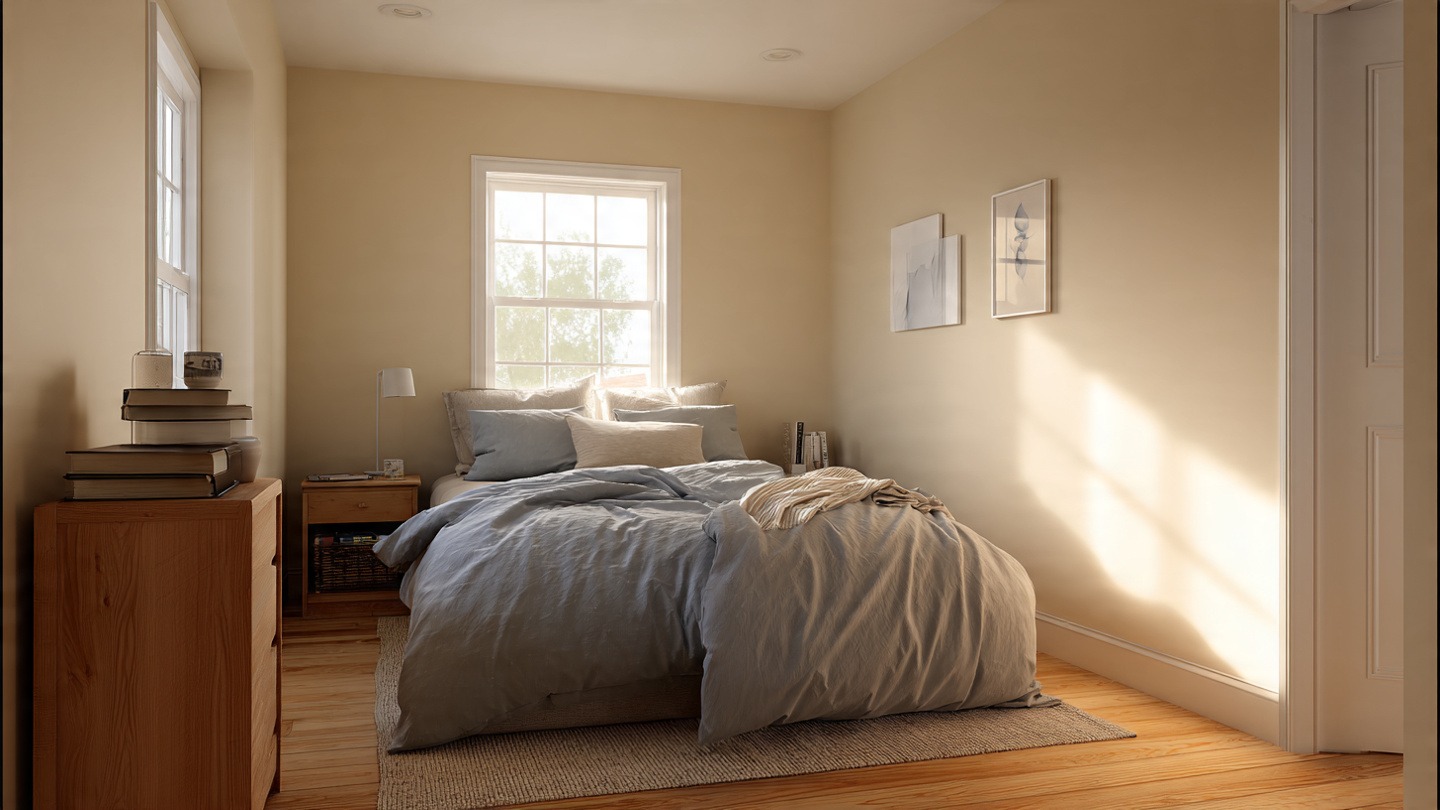
Feeling like your bedroom is more of a closet with a bed? You’re not alone. Many of us face the puzzle of fitting comfort, storage, and style into a compact space. But here’s the secret: a small room isn’t a limitation; it’s an invitation to get creative. The true key to a serene and functional retreat lies not in the square footage, but in strategic planning. This guide is packed with actionable bedroom layout ideas for small rooms that move beyond basic tips. We’re going to explore five distinct layout systems you can choose based on your room’s shape and your personal needs. By the end, you’ll see your small bedroom not for what it lacks, but for the huge potential it holds.
3 Golden Rules for Any Small Bedroom Layout
Before we dive into the specific layouts, let’s lay the groundwork. These three principles are non-negotiable for maximizing your space and should guide every decision you make.
1. Prioritize the Bed: In a small bedroom, the bed is the giant. Its placement dictates the entire flow of the room. Always start your layout by finding the optimal spot for your bed, considering windows, doors, and airflow. Everything else works around it.
2. Embrace Vertical Space: When floor space is scarce, look up. Your walls are prime real estate for storage and style. Think tall, slim dressers, wall-mounted shelves, and art that draws the eye upward. Installing floating shelves, like this versatile set, is a perfect way to utilize vertical space without consuming a single inch of floor area.
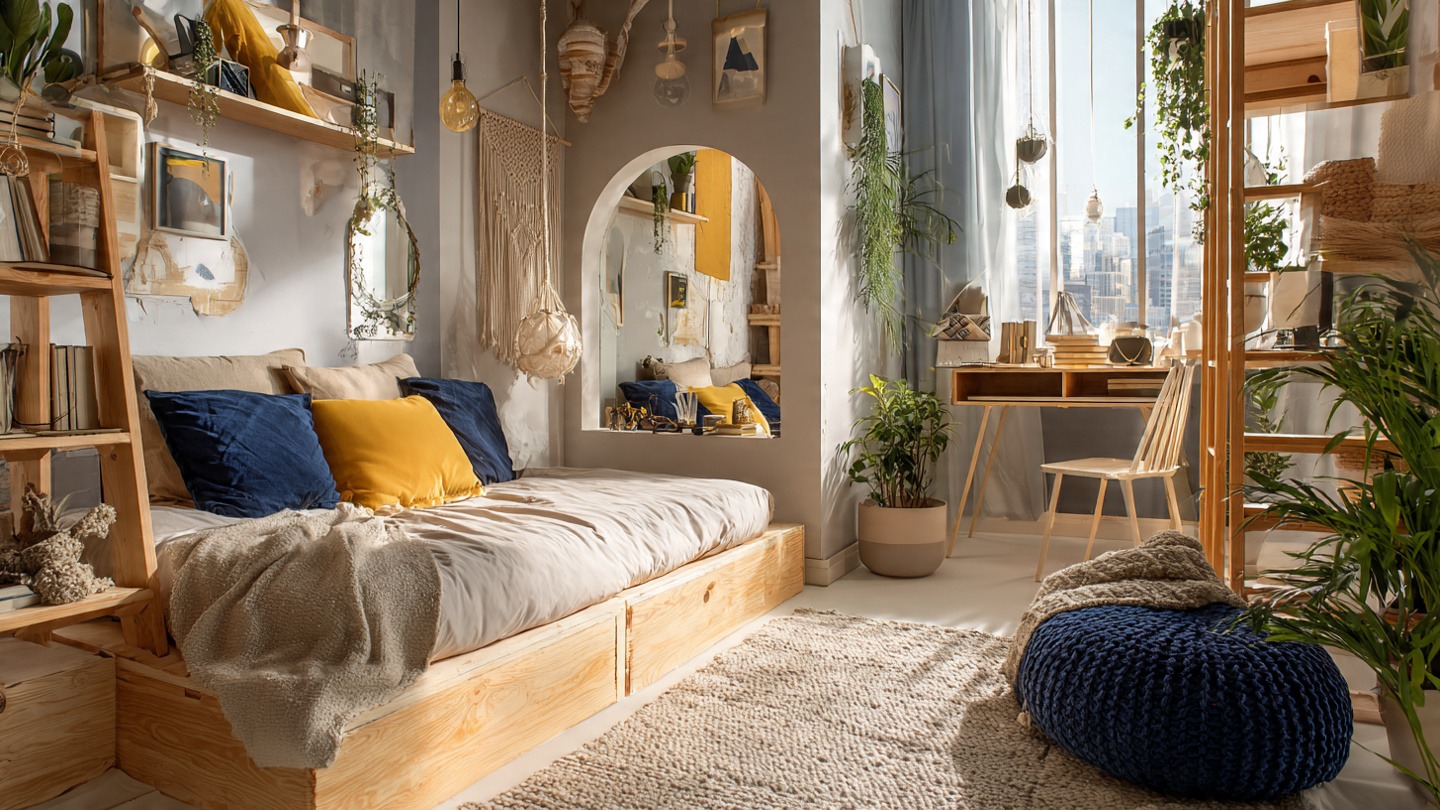
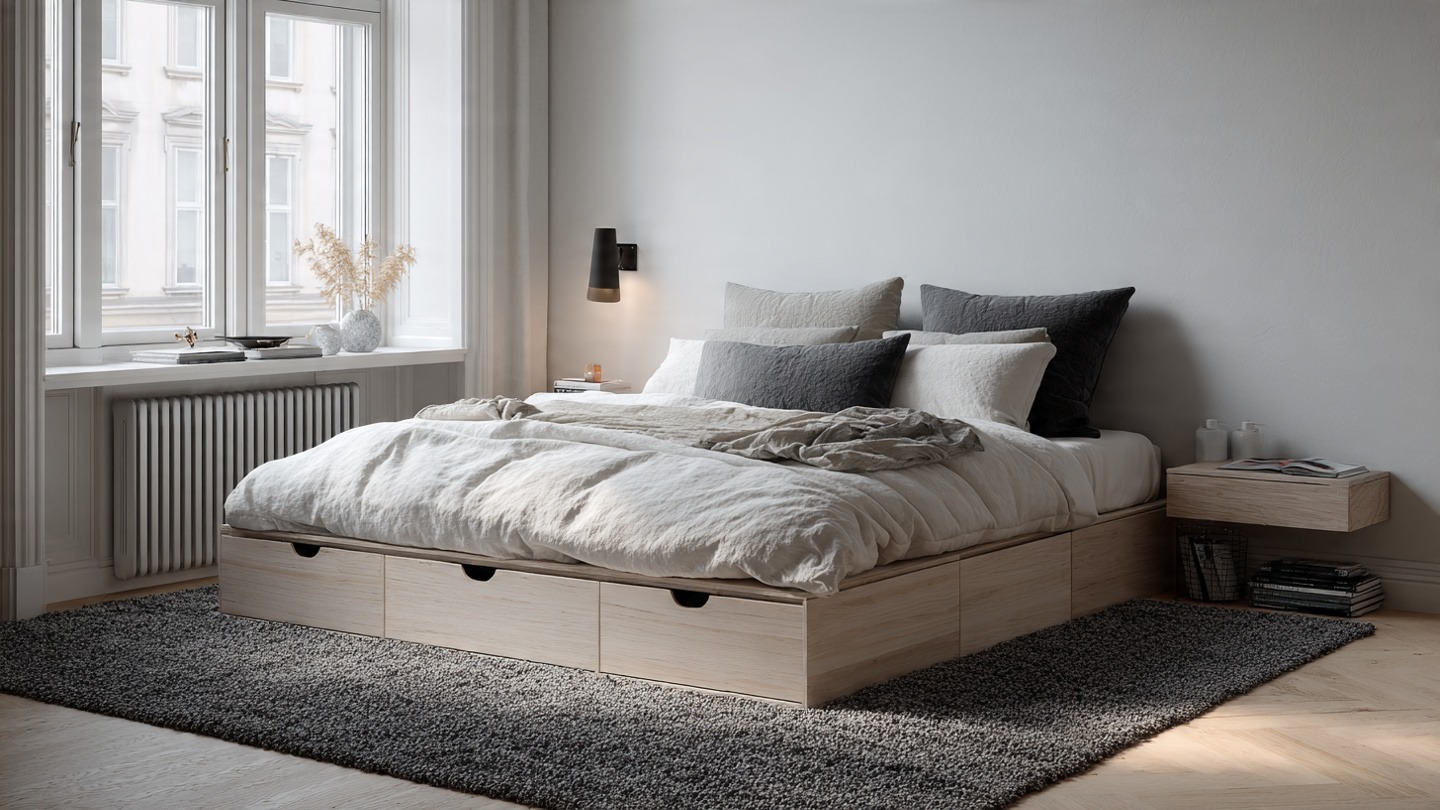
3. Choose Multi-Functional Furniture: Every piece should earn its keep. Seek out beds with built-in drawers, ottomans with hidden storage, or a desk that can double as a vanity. This approach to small room furniture arrangement is how you maximize bedroom space effectively.
5 Winning Bedroom Layout Ideas for Small Rooms
Now for the main event. Think of these as strategic blueprints, not just random tips. Each layout solves a common small-bedroom problem. Read through them, visualize your space, and see which one clicks. Remember, the best bedroom design for small spaces starts with a plan that fits your life.
Idea 1: The Zone Defense Layout
This layout is perfect for rectangular rooms or anyone who needs their bedroom to multitask. The goal is to prevent the room from feeling like one cluttered block by defining separate areas. Place your bed against the longest wall. Use a slim-profile headboard to save space. Then, use a area rug to clearly define the “sleeping zone.” In the opposite corner, place a small desk or a comfortable chair to create a distinct “activity zone.” This separation makes the room feel more organized and spacious.
- Try This: For the Zone Defense layout, consider a streamlined storage headboard to keep essentials nearby without needing bulky nightstands.
- Pitfall Warning: Don’t let the zones bleed into each other. Keep a clear pathway between them.
Idea 2: The High-and-Mighty Layout
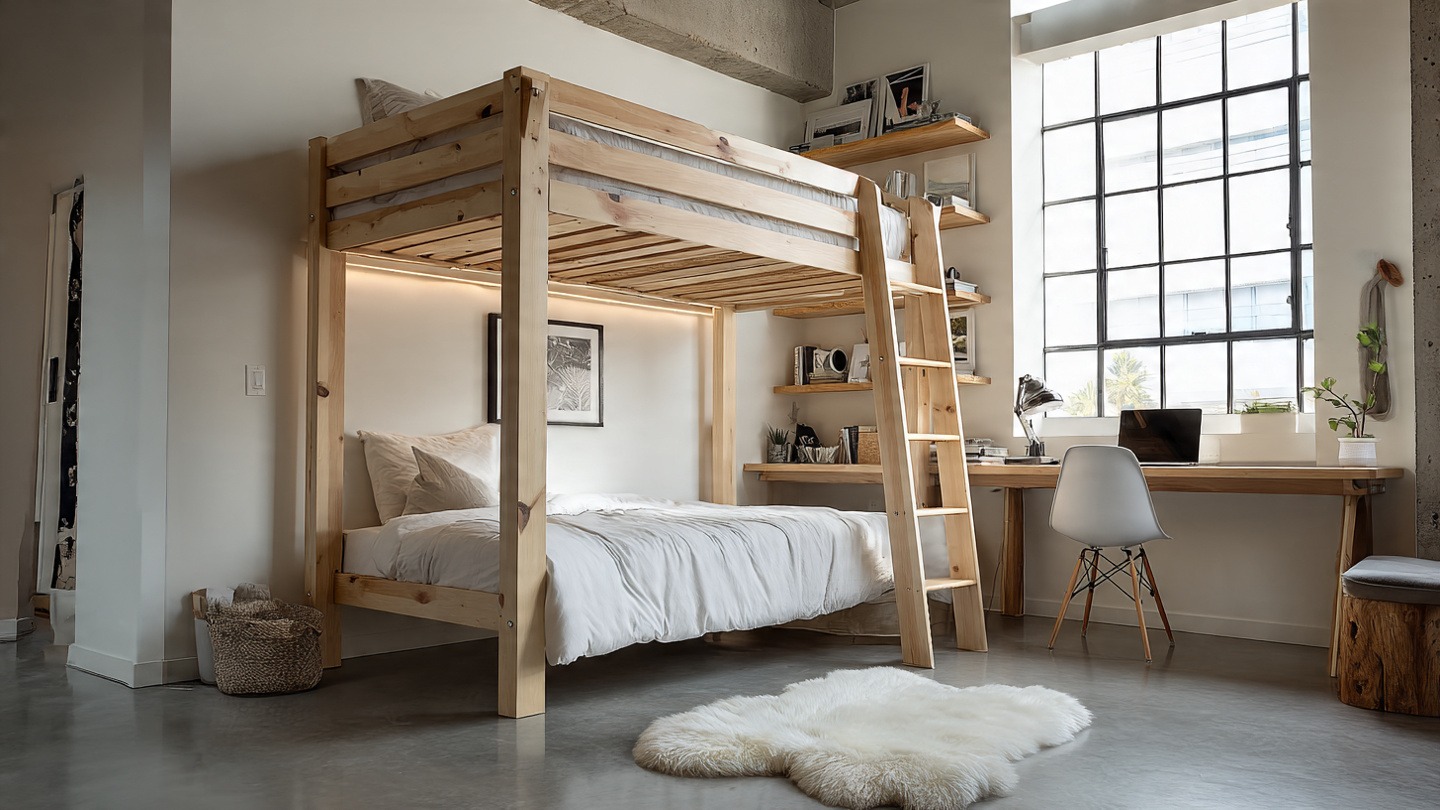
When every square foot counts, the only way to go is up. This layout utilizes loft beds or high bed frames with substantial space underneath. This freed-up area can become a desk, a cozy seating nook, or a dedicated storage zone. It’s arguably the most efficient of all space saving bedroom ideas.
- Try This: To execute the High-and-Mighty layout, a sturdy loft bed with a built-in desk creates two distinct zones in one footprint.
- Pitfall Warning: Always measure your ceiling height! You need ample clearance both above and below the bed for safety and comfort.
Idea 3: The Floating Bed Layout
This idea creates a sense of airiness by centering the bed in the room, away from the walls. It works best in square-shaped rooms. By floating the bed, you create accessible pathways on all sides, which makes the room feel larger. Pair it with a low-profile platform bed and minimal nightstands.
- Try This: Use a large, light-colored rug placed under the floating bed to anchor it visually without weighing the space down.
- Pitfall Warning: This layout requires discipline in furniture scale. Oversized beds or nightstands will clog the pathways and ruin the effect.
Idea 4: The Corner-Zone Layout
Ideal for small, square rooms, this layout tucks the bed into a corner. This frees up the rest of the room for other functions, like a larger dresser, a reading chair, or even a small exercise area. It’s a simple but powerful small bedroom layout trick that instantly creates more usable floor space.
- Try This: Use a corner shelf unit or a wall-mounted lamp to provide bedside functionality without a traditional nightstand.
- Pitfall Warning: Ensure you can still easily make the bed and change the sheets when it’s tucked into a corner.
Discover the best moody bedroom ideas for a dramatic, cozy retreat. Get inspired by color palettes, lighting tips, and must-have Read more
Discover clever small bedroom storage ideas to organize your space. Get practical tips and product recommendations to transform your cramped Read more
Discover beautiful master bedroom ideas for every style. Get inspired with our guide featuring actionable tips and product suggestions to Read more
Discover stunning cozy bedroom ideas you can implement today. From soft lighting to layered textiles, transform your space into a Read more
Idea 5: The Symmetry Layout
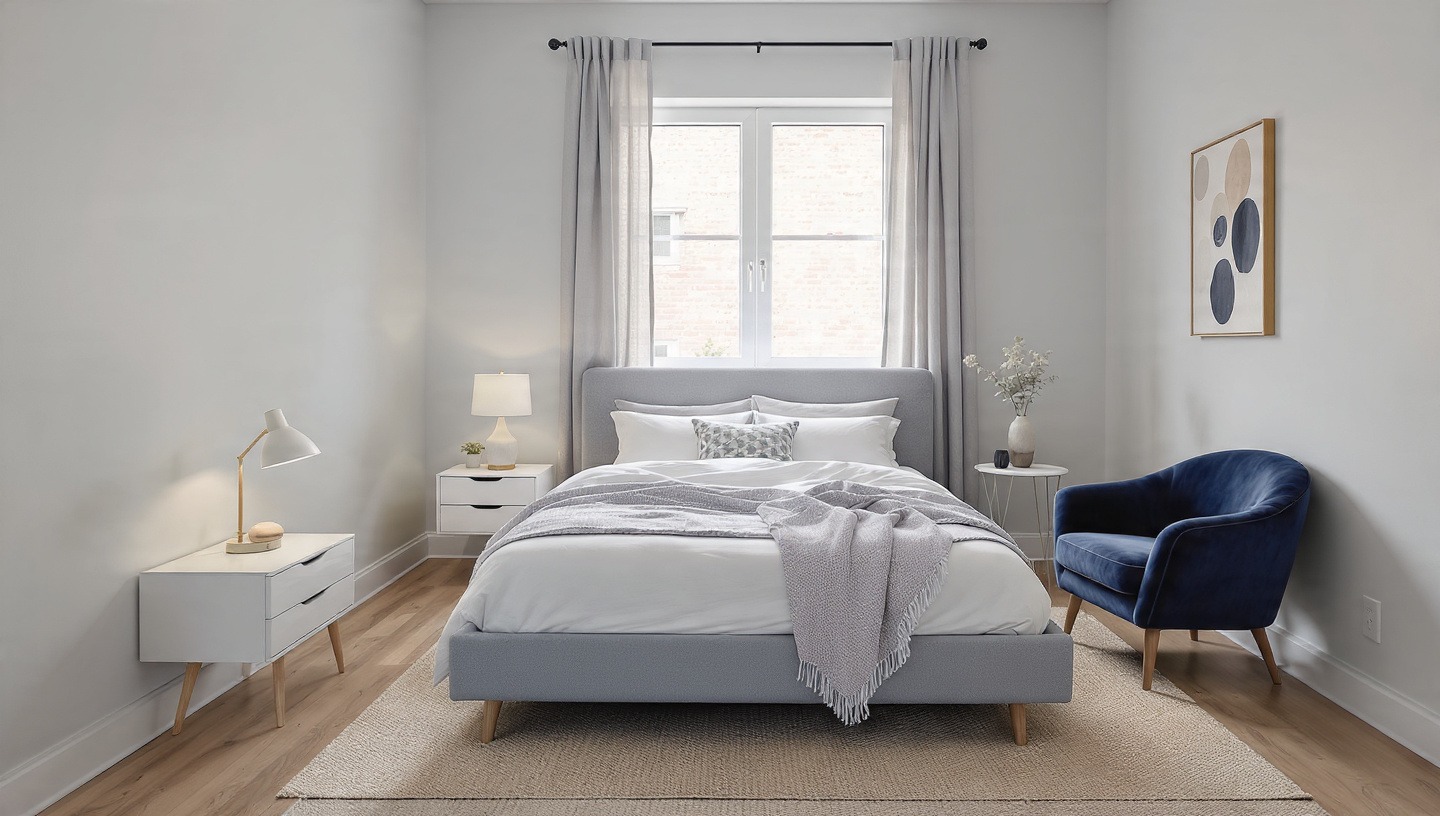
For a calming, hotel-suite feel, symmetry is your friend. Place the bed on the main wall, centered between two windows or under a single large piece of art. Use identical, slim nightstands and matching lamps on either side. This ordered approach reduces visual clutter and makes the room feel intentionally designed.
- Try This: Mount your lamps on the wall above the nightstands to free up surface space for a book or a glass of water.
- Pitfall Warning: In very narrow rooms, this centered approach can eat into precious walking space. Always measure twice before committing.
Pro Tips to Enhance Your Chosen Layout
Once you’ve picked your strategic layout, these advanced tips will elevate it from functional to fantastic.
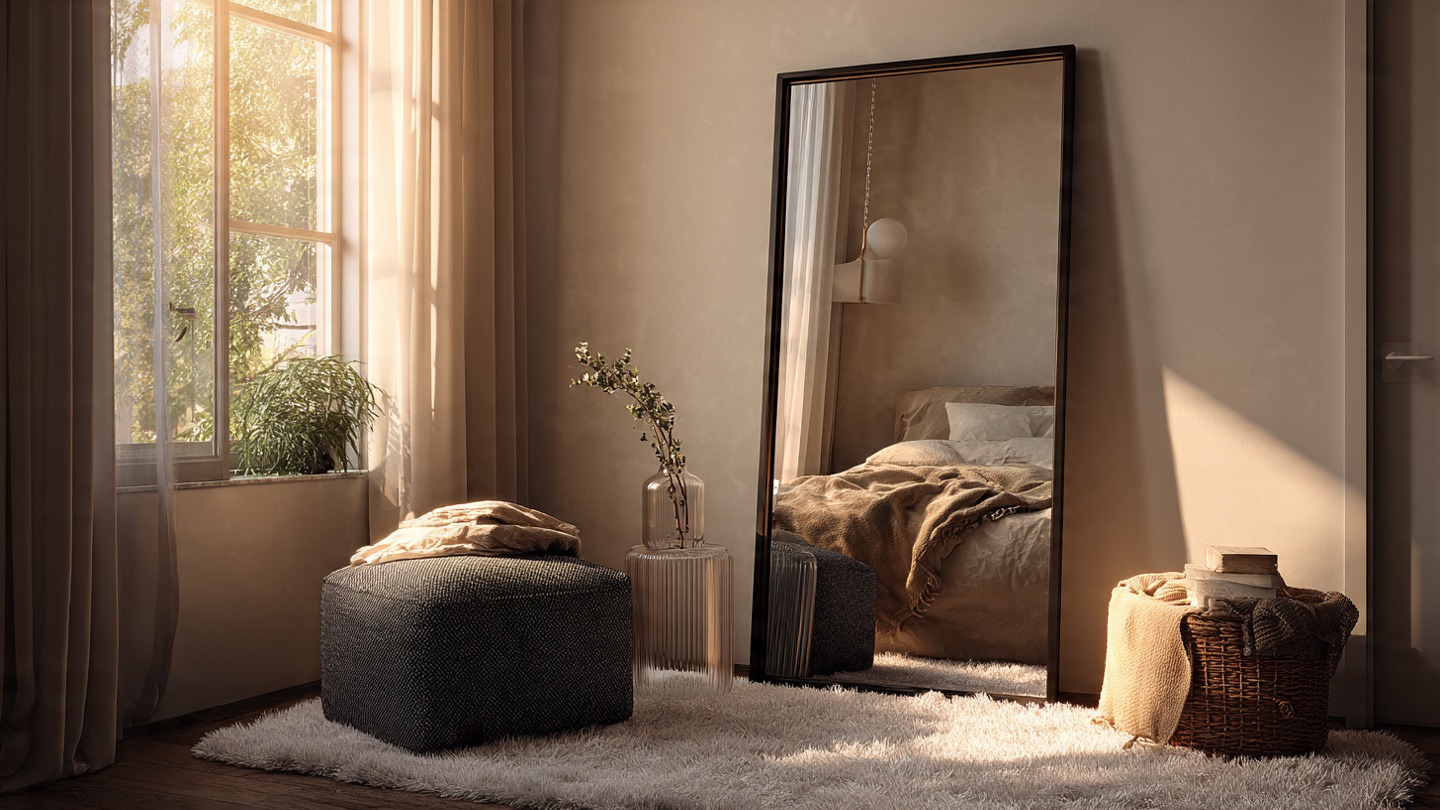
Mirror Magic: A well-placed mirror is the oldest trick in the book for a reason. It works. Position a large mirror opposite a window to double the light and the view, instantly expanding the perceived space.
Lighting Layers: A single overhead light creates harsh shadows and makes a room feel smaller. Instead, build layers. Combine ambient (overhead), task (bedside reading lamps), and accent (a small floor lamp in a corner) lighting to add depth and warmth.
Color and Scale: Light, reflective colors on walls and floors make a room feel airier. When choosing furniture, opt for pieces with legs (sofa, bed, chair) instead of solid blocks that sit on the floor. This allows light to flow underneath, creating a sense of openness.
Decluttering as Design: The most effective bedroom layout ideas for small rooms can be undone by clutter. Embrace closed storage and be ruthless about what earns a spot in your sanctuary. A clear surface is a powerful design element.
Small Bedroom Layout FAQs
Should my bed face the door in a small room?
This often comes down to personal comfort and the principles of Feng Shui, where it’s called the “commanding position.” If possible, positioning your bed so you can see the door without being directly in line with it can create a subconscious sense of security and better control over the room’s energy flow.
Can I fit a king bed in a small bedroom?
You can, but it’s a trade-off. A king bed will dominate the space, leaving little room for other furniture or movement. If a large bed is non-negotiable, adopt a minimalist approach with your other pieces (like using wall shelves instead of a dresser) and strongly consider the Corner-Zone or Floating Bed layouts to maximize bedroom space around it.
What is the biggest mistake in small bedroom layouts?
Pushing all furniture flat against the walls. This “wall-hugging” instinct often creates an awkward, empty center and disrupts the natural flow. Don’t be afraid to float a dresser or a chair to create better pathways and more dynamic zones.
Your Perfect Layout Awaits
Transforming your small bedroom is entirely within reach. The best bedroom layout ideas for small rooms are not about having more space, but about using your space more wisely. It’s a strategic choice. Grab a tape measure, sketch out your room, and pick one layout idea to experiment with first. Remember, a beautiful and functional small bedroom is not a fantasy. With these systems as your guide, you can create a space that feels uniquely yours, proving that great style and smart function can coexist beautifully, no matter the size.