
17 High Rise Living Room Ideas for a Stunning Apartment View
If you have a high-rise living room, you already own the best decor feature in the building: the view. The goal isn’t to “fill” the space with furniture—it’s to design a room that feels grounded, comfortable, and intentional while letting the windows do the talking. The ideas below focus on layouts that work in real apartments, plus practical choices for glare, privacy, and night-time ambiance.
1) Start with the view and build the room around a real focal point
In most high-rise apartments, the windows are the feature wall. That sounds obvious, but it changes what should be in your line of sight when you walk into the room. If the skyline is stunning, you don’t want a busy gallery wall competing with it—you want clean shapes, calm colors, and a layout that points attention outward.
The second part is choosing a functional focal point for everyday life. If you watch TV, don’t place it directly opposite floor-to-ceiling glass unless you’re ready to fight reflections. Instead, pick the best solid wall for the TV and treat the view as a second focal point—so the room works at 2pm and 10pm. If you don’t have a solid wall, the fix is usually a combo of solar shades + bias lighting behind the screen.
Tip: To make tall windows look expensive, hang curtains near the ceiling and extend the rod past the window edges so panels stack off the glass. A good place to start is an extra-long curtain rod that fits high ceilings.
2) High rise living room layout ideas that make the space feel bigger (floating furniture)
One of the biggest high-rise mistakes is pushing everything to the perimeter—sofa against the glass, chairs against the wall, coffee table stranded in the middle. It leaves the center feeling empty, and it makes your seating area look like it’s waiting for a lobby to fill up.
A better approach is a floating layout: pull the sofa 12–24 inches off the window line, place the front legs of seating on a large rug, and build a clear “zone” for conversation. If your living room is open-plan, floating furniture is also how you create structure without putting up walls. The room instantly feels more designed because the layout creates a path and a purpose.
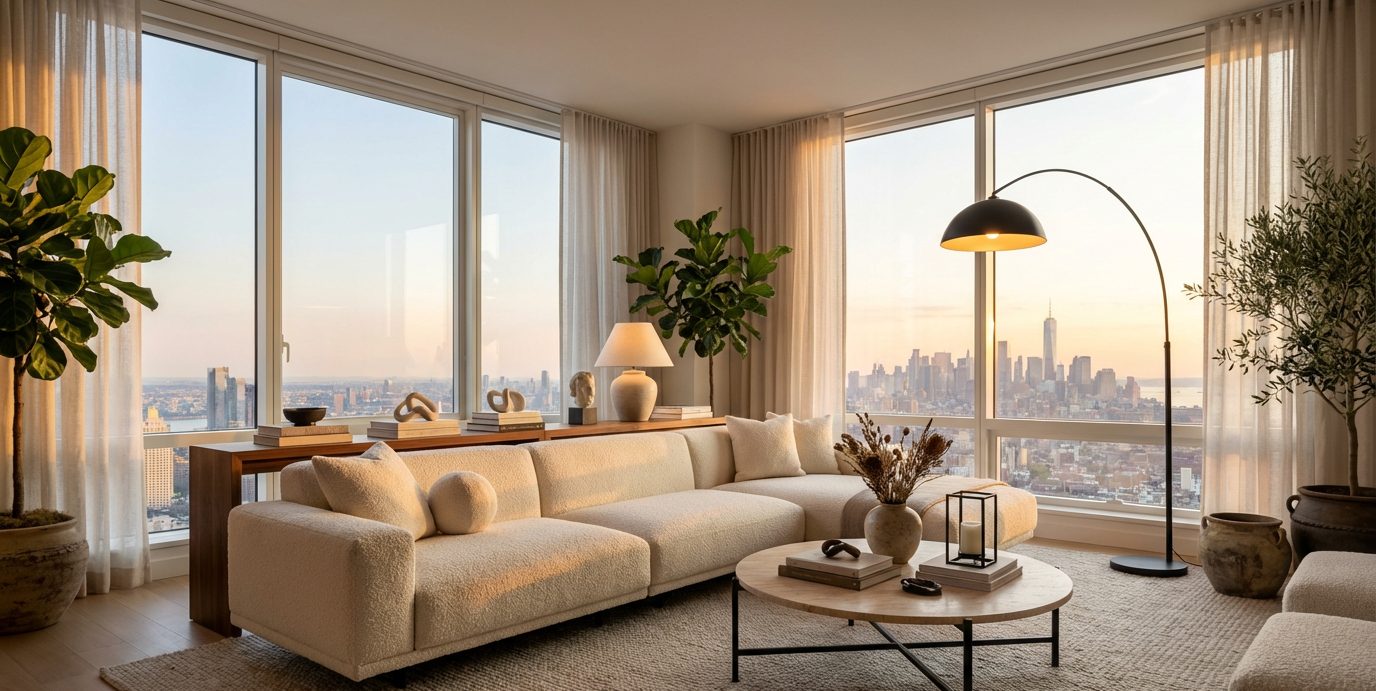
Tip: If you want one move that always reads designer: add a narrow console behind the sofa with a lamp on one end and two sculptural objects. It finishes the back of the sofa (so it looks good from the kitchen too) and adds warm light right where you need it.
3) Rug sizing for high-rise living rooms (the easiest way to stop the “floating” look)
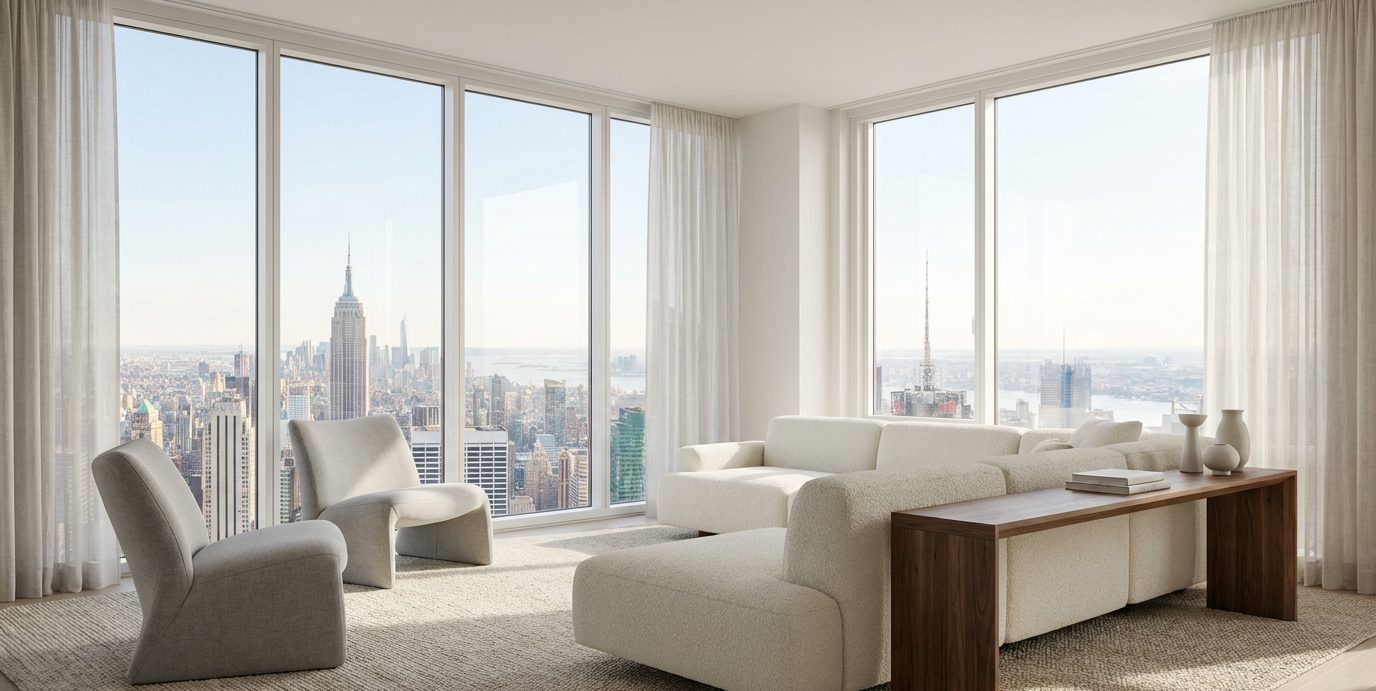
High-rise living rooms often have more open floor area and more vertical scale than a standard home. That makes small rugs look even smaller. If your rug doesn’t reach the front legs of the sofa and chairs, the seating group will feel disconnected—like pieces that were placed, not planned.
As a simple rule: choose the largest rug your room can comfortably take. In many apartments, an 8′ x 10′ works, but a 9′ x 12′ is often what makes a high-rise living room feel anchored and “finished.” If you’re unsure, tape the outline on the floor for a day and live with it—bigger usually feels calmer.
Tip: If you have tile or slick floors, don’t skip the pad. A good large rug pad stops creeping, adds comfort, and helps with sound (high-rises can echo).
For the rug itself, you’ll get the most flexibility from a subtle pattern or texture in a neutral colorway. Browse neutral 9×12 rugs if you want a safe “works-with-everything” base that still looks high-end.
4) Window treatment ideas for floor-to-ceiling windows (privacy + glare without killing the view)
Floor-to-ceiling windows are the reason you chose the apartment—and also the reason you might feel exposed at night. The fix is layering: you want options for daytime glare, soft diffusion, and full privacy.
A high-performing combo is solar shades + sheers + blackout panels. Solar shades preserve the view while cutting glare (especially useful if your building faces strong afternoon sun). Sheer curtains make the room feel softer and more expensive because they diffuse light and reduce harsh contrast. Blackout panels are optional for living rooms, but they’re great if you do movie nights or if your living room shares space with a guest sleeping area.
Tip: If you want a clean, modern look, go ceiling-mounted. A ceiling curtain track often looks more “built-in” than a rod in a high-rise. Keep the fabric simple—linen-look, warm white, or soft beige—so the skyline stays the hero.
5) Lighting ideas for high-rise apartments (make the room feel warm after sunset)
During the day, a high-rise living room is basically a photo studio. At night, it can feel flat because the windows turn into dark mirrors and the city lights outside become the brightest thing in the scene. That’s why overhead lighting alone rarely works.
The fix is layered lighting at different heights: a floor lamp to add vertical presence, table lamps for warm pools of light, and optional accent lighting behind the TV or along a shelf. Aim for warm bulbs (2700K–3000K) so the room feels inviting and the city lights look richer (not icy).
Tip: If you only buy one “statement” piece, make it a floor lamp with height. A curved lamp is especially good because it brings light over the seating area without stealing table space. Start with arc floor lamps and pick a shade that throws light downward to reduce reflections.
6) High-rise decor that balances tall ceilings (plants, tall pieces, and scale)
When the ceiling is high and the windows are huge, you need at least one “tall moment” that isn’t just curtains. Otherwise, your furniture can look short and scattered.
The easiest options are tall plants, a slender bookcase with negative space, or large-scale art that can visually hold its own. The key is restraint: one strong vertical element works better than several small ones. You’re not trying to compete with the skyline—you’re creating balance so the room feels proportionate.
If you don’t have the light (or you travel a lot), a high-quality faux tree can still look great in a high-rise because the setting is already polished and minimal. A 7-foot faux olive tree is a popular option because it reads modern, not tropical.
7) Materials and colors that make high-rise living rooms feel expensive
Many high-rise apartments lean modern by default—glass, steel, concrete, glossy paint. That can look stunning, but it can also feel cold. The trick is to add warmth through texture and natural materials.
Start with wood (walnut or oak tones), then layer in soft textiles: bouclé, wool, linen, and textured rugs. In bright rooms, avoid high-gloss paint on large walls because glare will amplify every hotspot. A durable eggshell finish is usually the sweet spot.
For color, warm whites and soft greiges are the most forgiving because they adapt to changing daylight. If your light runs warm (golden afternoons), a muted blue-gray can look sophisticated without feeling icy. Keep contrast controlled: black accents (metal frames, lamp bases) look sharp against a neutral base, but too many dark pieces can feel heavy next to a bright skyline.
8) TV wall and media styling that doesn’t look like an afterthought
High-rise living rooms often have limited solid wall space. If the TV ends up on the “only wall you have,” it can look temporary unless you design around it.
A floating media console is usually the cleanest solution because it keeps the floor visually light and makes the room feel modern. If you want something straightforward, look at floating TV stands and size it wider than the TV so the wall feels balanced.
Then add a simple styling system: one large object (a vase or a stack of books), one medium (a frame or sculptural piece), and one small (a candle or bowl). That’s enough to look intentional without cluttering the view.
9) Comfort upgrades high-rise living rooms often need (sound, sun, and everyday wear)
High-rise living rooms can echo more than you expect—hard floors, tall ceilings, and lots of glass don’t absorb sound. You don’t need to turn the room into a recording studio; you just need to add soft surfaces strategically.
A thick rug with a pad, curtains (even sheers help), and upholstered seating go a long way. If you have a very open plan, consider a fabric ottoman or a soft accent chair to add absorption. These changes make the room feel calmer, which matters when the view already adds “visual energy.”
Sun exposure is the other high-rise wildcard. Fabrics can fade faster when you have strong daylight every day. Performance upholstery or washable slipcovers are a smart choice if the sofa gets direct sun. For rugs, washable options can be practical, but choose styles that still look elevated—browse washable area rugs in neutral patterns rather than flat solids.
10) Quick layout cheat sheet (choose the one that matches your room)
If you want a simple way to pick a layout, start with how you actually use the room:
View-first layout: Sofa faces the windows, with two chairs angled in. This is perfect if you entertain and the view is the main event.
TV-first layout: Sofa faces the TV wall, with a chair or small reading corner near the windows. This is the best everyday setup if you watch TV regularly.
Small-space layout: Loveseat + one chair + nesting tables, with a large rug and tall curtains to stretch the room visually.
No matter which layout you pick, keep circulation clear—especially near balcony doors—and avoid blocking the glass with bulky storage.
FAQ: High Rise Living Room Ideas
How do you arrange furniture in a high-rise living room?
Use a floating layout whenever possible: pull the sofa off the windows, anchor the seating area with a large rug, and keep a clear walkway to balcony doors. Treat the view as a feature, but put the TV on the best solid wall to reduce glare.
What are the best window treatments for high-rise apartments?
Layer solar shades for daytime glare control with sheers for softness, then add blackout panels if you want full privacy at night. Ceiling-mounted tracks and high curtain placement make the windows look taller and more high-end.
What colors look best in a high-rise living room?
Warm whites and soft greiges are the safest because they adapt to changing daylight. Add contrast with black accents and warmth with wood tones and textured fabrics.
Final takeaway
High-rise living rooms look best when the layout floats, the rug anchors the seating, and the lighting is layered so the room stays warm after sunset. Keep the palette calm, add one tall element for scale, and let the skyline be the statement.